SaaS and software are not dead
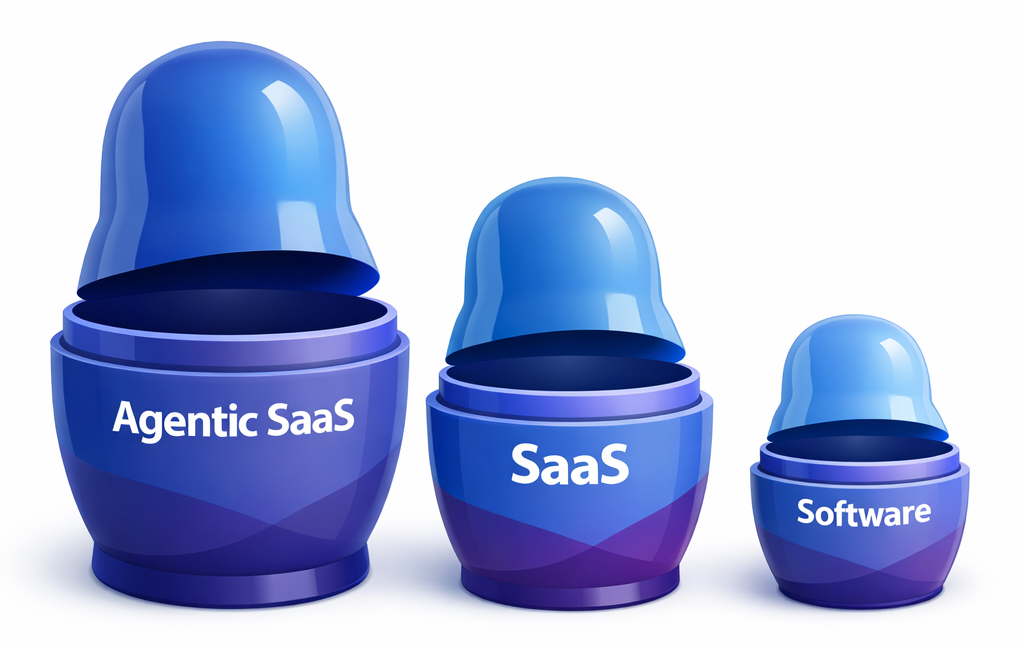
This was a unique week. The tech world and the stock market world held hands. There was a convergence of the idea that AI will “eat” SaaS and software. It had a major negative impact on the stock market. In the world I live in, call it the “startup” industry, every VC and founder is also talking about it. The vast majority of VCs have declared that SaaS is done. Agents and vibe coding (or “agentic engineering,” the latest coined term by Andrej Karpathy) will replace software and SaaS companies.
There is something off about this prognostication.
Let me start by saying I don’t know what’s going to happen, but I have confidence in my bones that software and SaaS won’t go away. I actually think we’ll have more software and more SaaS, but it won’t be the shape we see it today.
First, I remember when the term SaaS was coined. It wasn’t about the narrow definition of SaaS today (cloud-based subscription). It was the (counter-)reaction to a world where you had to buy software once, pay a high upfront price for it, and then you needed to update that software (and pay again) every couple of years. Honestly, it wasn’t great for consumers and SMBs/Enterprises, and it wasn’t great for software makers.
For software makers, SaaS made it easier to have predictable revenue. It also changes the dynamic of software updates. In the past, you had to have enough new things in a new version of software to justify the customer paying for an upgrade. New releases would only come out every one or two years (three or four for operating systems). Deployed software was also a nightmare. It was incredibly hard to support different hardware, operating systems, and compatibility with other programs on the same server or desktop.
People don’t want software. They want solutions.
The software makers’ world is easier with SaaS than with shrink-wrapped software. On the flip-side, SaaS brought a revolution to customers. We’ve been living in this software-is-easy world for 15 years. People have forgotten how it used to be.
In the early 2000s, frustration with your computer was a common thing. Most people would spend days or weeks trying to get something to work. A simple video editing software? Good luck with that! Get that CRM application installed and working on your new laptop? You’ll need IT for that! Update a driver, rename a file, change the registry, move it to the D: drive, download this clean-up tool. It was an F-ing nightmare!
The old and the new-new meet again
I can’t see a world where the average person is solving their own problems with vibe-coded software. Most people cannot do this, no matter how friendly the tools and systems are. Most people don’t want that. People want the easy-button.
When an ex-executive from Amazon says they vibe-coded a CRM for their new startup over the weekend, or when a reporter says they built a project management tool in one hour, they aren’t talking about a full CRM or a proper project management tool. They built 1% of the feature set. They will have to go back to doing more vibe coding to add every other feature (spoiler: it won’t work). In the end, they will have an unmaintainable and unwieldy project.
I can’t see a world where SMBs or enterprises have dozens (or thousands) of in-house built solutions. Who’s going to maintain that? Who’s going to guarantee that security patches are applied? Who’s going to ensure that these tools are not one poor prompt away from DDoS-ing their own system?
But the agents will eat SaaS! Right?
Let’s put vibe-coded software aside. We established that’s going to be a hard pill to swallow. What about agents that can do the work that a SaaS tool used to do? Isn’t that the future? Yes! Yes! Yes! But that is SaaS! Agents are software that run on computers, servers, or on your mobile device. They require someone to create, maintain, and often operate its backend.
ChatGPT, Claude, Gemini, and Copilot might seem like they are free/cheap, or bundled with what you already have. If you think these LLM tools will stay at the same price point they are today, I have a space station to sell to you. Every AI tool is heavily subsidized today because we are in the land-grab phase (remember Uber and Lyft in the 2010s?). Advancements in hardware and machine learning techniques have helped the cost drop significantly over the last few years, and they are still highly unprofitable.
Let’s hypothetically say they can replace a SaaS product that you or your company pay for: a project management, CRM, or inventory tracking tool. From an economic perspective, if you were paying $20/user/month for that tool before, now any of these vendors can price their offering just below $20, and that might be enough to convince you to switch to this new way.
We’ll also have the specialized agents layer. You’ll have companies launching agents that specialize in skills for all roles, from lawyers to veterinarians, from accountants to therapists. An agent that replaces a CRM tool and specializes in the hospitality industry will very likely disrupt a portion of the market for traditional horizontal CRM tool. And guess what, that new specialized agent is a SaaS product that a boutique hotel will pay for.
Human labor -> Agent labor
The last thing that I want to say is that agents will disrupt the labor force. People obsess about the idea of categories of job roles being eliminated. The best way to think about this is in terms of skills and not roles. A role is a collection of skills, knowledge, and activities. Agents will excel in some skills and flop in others. In practice, that doesn’t translate into the elimination of roles, but rather that roles will have fewer skills and activities to achieve the same goal when paired with an Agent. It means that organizations will need fewer employees to do the exact same work.
This creates an interesting situation. If an organization spends $1M in (human) labor in a specific role, and they can eliminate 30% of that workforce, where do you think those $300K in savings are going to go? If history and economics are any indicator, 30-50% of that money will go directly to the AI agent! More specifically, to the SaaS company that built and maintains that agent. Otherwise, it’s money left on the table, and there is nothing that capitalism hates more than under-optimizing gains.
This is my long-winded way of saying: 1) We’ll have ten times more software in the next decade than we have today (thank you vibe-coders!), and 2) tech companies (big and small) will be responsible for an even bigger share of the economy.